I've always been a wanderer. Growing up in Lithuania (ex communist country), we lacked many basic resources -no running water at home, having to wear same shoes or same clothes for 2 years day in and out, I spent most of my childhood fishing, playing chess or mostly like many kids, riding a bicycle — exploring streets within the city I lived in, as well as all surrounding roads in suburbs I could reach. Whatever the reason, I always liked to explore new places. When I moved to the United States at 19 alone, without speaking English or knowing anyone with only $10 in my pocket, a whole different world opened up to me. Instead of working for others or being dependent on government, in USA I realized I was able to work for myself and earn a living providing services to people using skills I have. Then with money earned to expand my horizons and live the life I want and explore much further. Since, I've lived in at least 5 states, visited pretty much all the rest of them, and also made my way through countries like Norway, Italy, Germany, Sweden, Poland, Lithuania, Canada, Fiji and more. Some nomad-like qualities are definitely well and alive within me.
But it was a personal crisis — going through a divorce — that turned a lifelong love of travel into something more meaningful. I will always remember my first solo trip to Death Valley after the separation. It woke something up with me. Since I always brought a camera no matter where I went(it became my new wife LOL). The West Coast opened up in front of me and something shifted. The empty desert roads, followed by the redwood forests of Humboldt County. The waterfalls cascading down the slopes of Mount Rainier. The fog rolling in off the Pacific Ocean. While I have been on these roads before, I wasn't just passing through these places anymore. I actually started seeing them.
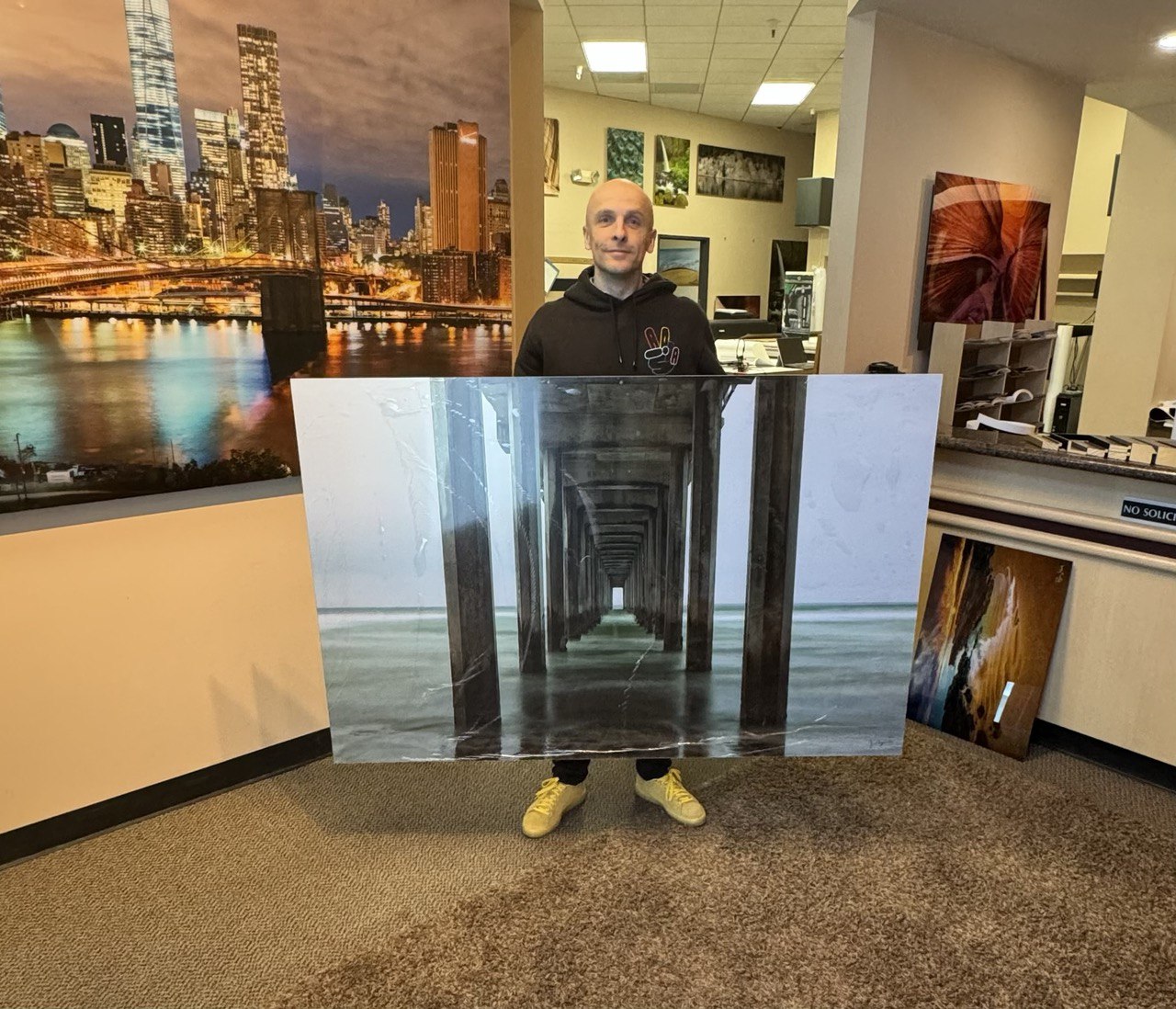
Photography became my therapy. The act of slowing down to notice, chasing the right light, waiting for a moment — it was grounding in a way that nothing else was. What started as a way to heal became a passion and a calling.
I also have to tell you that Jongas is not my real name. It was a nickname given to me in high school. Somebody just said this name out loud in my direction and it somehow stuck. Nobody knows what the word means or how it came about. The only reference to it I found was someone has this last name in Nigeria -where I have zero connections of any kind.
But the more I thought about it, the more I realized why I was chose this name for my persona as a landscape and nature photographer. What it signified at the time was a restless way of my being. I've always had a mind that goes a 150 miles an hour - a type of ADHD if you will. I learn, understand and get bored with most things very quickly. Hence travel and photography is whats helps my mind keep sane. I see the world as this huge playground and where my task is to treasure hunt and find these most amazing nature's places. Each one rewarding in its own right.
The best part is, these locations are pretty much endless and no way for me to photograph them all. That, believe it or not, is what gives me peace and prevents me from getting bored with it (yet). Yep... I know that might sound a bit crazy, because it definitely is! lol :-)
In simple words - Jongas represents this type of restlessness that can't be easily contained and needs to be busy doing something all the time, which may appear as aimless to other people. Yet there is method to this madness and can be described with famous saying - "not all who wander are lost". I get lost because that is the only way I am able to find myself.
The Process Of Creating Modern Fine Art
Landscape photographer's biggest challenge is you can only be at one location at once. But mountains, lakes and waterfalls are usually scattered across long distances. Therefore we are always moving around, by car, by plane or by any means possible. A typical year in modern fine art nature photographers life involves driving 50,000 miles per year(1000 miles a weekend on average). I've been pretty consistent over 9 years changing tires on my car once a year like clockwork.
Some photographers, who are doing it full time, have luxury of going to a location they want to capture and stay there for a few days, waiting for a better weather or capture better light, to get a photo that looks best(yes we are also bound by the elements of weather, you can't take a photo with clouds, when there are no clouds in the sky).
Since I don' t have this luxury (I still have a day job and other responsibilities), my time is limited and many times getting to a location I want to shoot, involves looking at the weather app every day and literally hopping into a car and driving where the clouds are forming. I sometimes refer to myself a "fly-by" photographer. Many of my images were taken successfully and with the right conditions, by God's will, pure luck and some other divine interventions. That's how I also know I'm on a right path though.
I have to say, my trips are not always successful, I sometimes come home completely empty-handed after driving 2000 miles round trip. I wish I could have stayed at the location longer, but most of the time I can't and have to try to go there again some other time.

The Camera and The Craft Of Producing Museum Quality Art
I shoot with a Canon EOS R5 — a mirror less body that I switched to after years with the Canon 5D Mark III. The R5 gives me the resolution and dynamic range I need to produce large format prints that hold their detail at sizes up to 40x120 inches without losing a thing. For a landscape photographer who shoots panoramas, image quality at extreme sizes isn't optional — it's everything.
Every photograph goes through meticulous post-processing before it's ever considered for print. Getting the color, contrast, and tonal range right on screen is only the beginning. The final test is always the print itself. Luckily with today's technologies, we can make made bad images look good. That doesn't mean we use AI, it means we can fix issues that were not possible to fix 10 years ago and make even old photographs look better and make them printable in larger sizes.
Ever since I started, my main goal was to learn to produce images that are nearly perfect. I aim for it, I always work and improve in that direction. I hire coaches to help me with it and I work with print professionals who understand it and help me fix any possible errors.
When you get your prints delivered to you. I want you to see you have something of quality, whether you realize that consciously or you just have a feel that its a great quality art without being able to articulate it.
The Kit & Process
- Camera Body: Canon EOS R5 (mirrorless)
- Previous Body: Canon 5D Mark III
- Maximum Print Size: Up to 40×120 inches
- Post-Processing: Meticulous color, contrast, and tonal correction before every print
- Edition Size: Typically 50 signed, numbered prints per image
- Authentication: Certificate of Authenticity with edition number and signature
The Prints — Why TruLife Acrylic Mounting
I chose TruLife acrylic-mounted printing because it is simply the finest way to display a photograph. Your image is printed on archival photographic paper and face-mounted behind a sheet of TruLife optical acrylic — a museum-grade material that delivers extraordinary depth, color richness, and a luminous quality that makes the image appear to glow from within.
This is the same print surface used in the world's finest fine art photography galleries. It protects the photograph beneath while adding a visual quality that no canvas or standard print can replicate. Every print I produce is a signed limited edition, typically 50 pieces per image, and comes with a Certificate of Authenticity confirming the edition number and my signature. When you hang one of my prints on your wall, you are hanging a piece of original fine art — not a reproduction.
"When you hang one of my prints on your wall, you are hanging a piece of original fine art — not a reproduction."
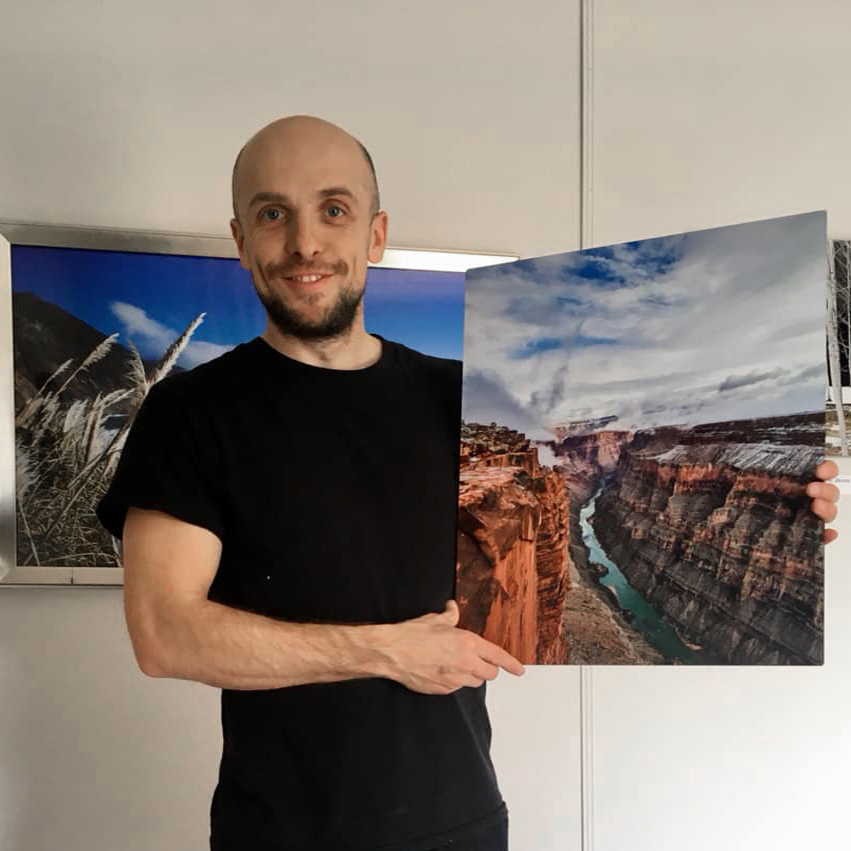
Choosing Best Locations To Photograph For Landscape Photography
It's difficult to pick favorites — especially when someone asks what my favorite location is. The truth is, every place I've photographed has given me something different. But after a while they all become the same, only with a different flavor. Kinda like ice cream. It's like a job, you do where you have to go in that moment and you do what you have to get done. But the key is to really be inspired. Because there is no way in the world you will drive 10 hours some place you have no inspiration for, no matter how great it may appear to be.
Being on the West Coast it makes it a little easier, because we have such a variety of different landscapes within reasonable driving distance that you can literally knock yourself out for the next 10 years and still you won't visit all of them.
They do come in clusters though. You categorize them based on seasons and weather. You obviously don't want to go to deserts in summer, so you stay closer to ocean or mountains of north. Winter time is the opposite. Cities you get anytime in between and then you spread into further destinations.
The Pacific Northwest is where my heart currently is. The way the light moves through those forests, the way fog sits on the mountains in the early morning — there's a quality of light there that I haven't found anywhere else. One day I hope to move there and spend years exploring everything it has to offer.
Los Angeles and Las Vegas are home. Mount Shasta and the waterfall country surrounding it. The ancient redwoods of Humboldt County — trees that were standing long before any of us arrived and will be standing long after we're gone. The Pacific Coast Highway from Big Sur to Morro Bay, where the land meets the ocean in a way that never gets old no matter how many times you've seen it.
Beyond the West Coast, I've photographed across the American Southwest — the canyon country of Arizona, the rolling wheat hills of the Palouse in Washington, the alpine yellow aspen scenery of Colorado. I've brought my camera through the streets of Las Vegas, San Francisco, Seattle, and New York. And further afield — Venice's canals, the fjords of Norway, the coastal towns of Italy, the historic streets of Vilnius.
Every location ends up on my walls eventually.
Purpose For Creating Photography Art
People often tell me that looking at my prints makes them feel like they are actually standing in that place. That means everything to me — but it's not quite the goal I'm aiming for.
My goal has never been to replace an experience. No photograph — no matter how large, how sharp, how beautifully printed — can replicate what it feels like to stand at the edge of a canyon at sunrise, or walk into a redwood grove for the first time, or watch the sun drop into the Pacific while the sky turns every shade of orange and red. Nothing can replace that.
I hope my prints will inspire you to go there. To pack a bag, get in the car, and make the trip. To take your kids or your friends or your partner to the places that made me stop and set up a tripod. To build memories together in the places that matter. A photograph on your wall should be a reminder that the world is extraordinary and worth exploring — not a substitute for going out and experiencing it yourself.
I became a photographer during a difficult period of my life. Travel and photography helped me find my footing again. If my work inspires even one person to get out and explore — and to share that experience with someone they love — then I've done what I set out to do.
My daughter is thirteen now. She's watching everything I do. That's the most important audience I have.

Browse The Fine Art Collections by Jongas
Explore Eddie Jongas's TruLife acrylic-mounted fine art photography prints — landscape, seascape, city, abstract, and nature photography available as limited edition wall art, shipped free to all 50 states.
Eddie Jongas is a self-taught fine art landscape photographer based in Las Vegas, Nevada. He shoots with a Canon EOS R5 and produces limited edition TruLife acrylic-mounted prints available exclusively through jongasfineartphotography.com.
