In the companion piece to this article — What Is Traditional Art? — we explored the definition of traditional art as a category: the mediums, the principles, the historical lineage that runs from cave painters through the Impressionists to the contemporary artists working in paint and clay today. But a category doesn't make art. People do. And the question of what makes someone a traditional artist — as opposed to someone who simply uses traditional materials — is worth its own answer.
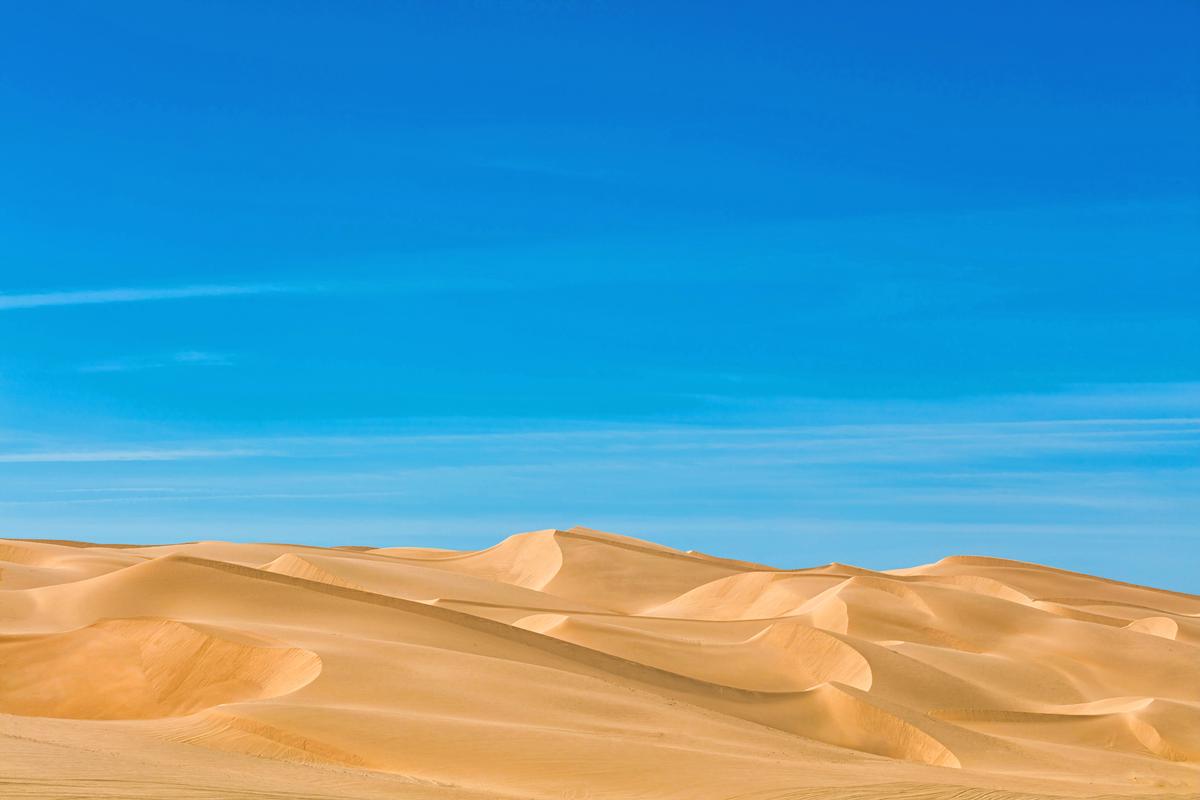
I think about this question a great deal, because the answer applies directly to what I do. I am a modern fine art photographer. I use a Canon EOS R5, not a brush. But the longer I have worked at this craft, the more clearly I see that the practice of landscape photography at a serious level is continuous with the practice that produced the great landscape painters. The same subjects. The same commitment to light. The same willingness to go to extreme places and wait for the exact conditions that justify the image. The instrument changed. The calling didn't.
But before we get to that, let's answer the primary question.
What Actually Makes Someone a Traditional Artist?
The distinction between a traditional artist and someone who occasionally makes art is not about how often they work, or whether they have a studio, or whether they sell their pieces. It is a distinction of relationship — specifically, the relationship between the person and the craft.
A traditional artist is someone for whom mastery of a craft is inseparable from the act of making art. The technical skill and the creative vision are not two separate things — one enabling the other — but a single unified practice that develops through years of sustained commitment. You cannot be a traditional artist and treat the craft as a delivery mechanism for ideas. The craft is part of the idea. How something is made is part of what it means.
This explains why the same subject in the hands of two different painters produces such radically different results. Rembrandt and Van Gogh both painted self-portraits. Both were traditional artists working in oil on canvas. But their relationship to the materials — Rembrandt's meticulous glazing, Van Gogh's agitated impasto — produced works as different as any two things could be while sharing a medium. The craft was inseparable from the vision. It always is, for a traditional artist.
With that in mind: here are eight artists whose lives and work define what a traditional artist looks like in practice — from the Dutch Golden Age to the present day.
Eight Traditional Artists Who Define the Tradition
The Eight Artists at a Glance
- Rembrandt van Rijn (1606–1669): Dutch master of light, psychological portraiture, and over 40 lifetime self-portraits.
- Albert Bierstadt (1830–1902): German-American painter of the American West whose monumental canvases helped build the case for national parks.
- Winslow Homer (1836–1910): Self-taught Civil War correspondent turned coastal painter, known for unsentimental directness.
- Pablo Picasso (1881–1973): Classically trained prodigy who used total mastery of tradition to dismantle it — producing an estimated 13,500 paintings across eight decades.
- Georgia O'Keeffe (1887–1986): Desert painter of sustained attention, working into her nineties in the New Mexico landscape she made her own.
- Frida Kahlo (1907–1954): Painter of radical self-honesty whose 143 works — mostly self-portraits — were produced despite 35 surgical operations across her lifetime.
- David Hockney (born 1937): The most commercially successful living traditional artist, still evolving at 86, from California pools to Yorkshire landscapes to iPad paintings.
- Ansel Adams (1902–1984): The photographer who most clearly bridges traditional art and the camera — and whose Zone System is as rigorous as any classical painting technique.
Rembrandt van Rijn (1606–1669)
Rembrandt is widely regarded as the greatest painter in Dutch history and one of the finest of any era — a reputation built on his mastery of light, his psychological depth, and his technical range across portraiture, biblical scenes, and landscape. He painted light the way no one had before: not as illumination, but as drama. The shadows in a Rembrandt are as carefully composed as the highlights. The darkness earns the light.
What most people don't know about Rembrandt is that he was, at the peak of his powers, one of the wealthiest people in Amsterdam — and then he went bankrupt. By 1656 he had filed for insolvency, losing his house, his art collection, and most of his possessions. He continued painting prolifically through these years, producing some of his greatest work while insolvent. He is also believed to have painted over 40 self-portraits across his career — more than almost any Western artist before the modern era — creating an unparalleled record of a face changing under the weight of a life.
The lesson Rembrandt's life offers any traditional artist — or any fine art photographer — is that the work continues regardless of the external circumstances. The paintings he made while bankrupt are indistinguishable in quality from the paintings he made at the height of his success. The craft and the commitment were constant. Everything else was noise.
Albert Bierstadt (1830–1902)
Of all the traditional artists on this list, Albert Bierstadt is the one whose subjects most directly parallel my own. He was a German-American landscape painter who traveled west with government survey expeditions in the 1850s and returned with paintings of the Rocky Mountains and Yosemite that the eastern establishment had never seen anything like. His canvases were enormous — some six feet by ten feet — designed to overwhelm the viewer with the scale and grandeur of a landscape that most of his audience had never visited.
Bierstadt's paintings of Yosemite Valley were instrumental in building the public case for the preservation of America's wilderness — they showed people in New York and Boston what they stood to lose if development went unchecked. His art was not just aesthetics. It was advocacy. The national park system, in a real sense, owes something to Albert Bierstadt's ability to make a painting of a place feel like being there.
He sold work for up to $35,000 in his time — extraordinary sums — and was accused by some critics of being too theatrical, too spectacular, too willing to enhance the drama of a landscape for effect. It is the same criticism occasionally leveled at photographers who use golden hour light and dramatic cloud formations to their full advantage. The criticism misunderstands the artistic intention. The goal was never literal accuracy. It was emotional truth.
I photograph the same American West that Bierstadt painted. The Pacific Northwest, the California Sierra, the canyon country of the Southwest. One hundred and fifty years separate our instruments. The impulse is the same.
"The goal was never literal accuracy. It was emotional truth."
Winslow Homer (1836–1910)
Winslow Homer was largely self-taught, which may explain the directness of his work — it has no academic mannerisms, no inherited conventions about how a particular subject should be handled. He covered the Civil War as an artist-correspondent for Harper's Weekly, producing images that documented without sentimentalizing. Then he turned to the coast.
In his forties, Homer moved to a remote cottage at Prouts Neck on the Maine coast and almost never left. He was not a recluse in any pathological sense — he corresponded widely and maintained friendships — but he chose isolation deliberately, because the North Atlantic required his full attention. The coastal storms he painted in oil, the Caribbean watercolors he produced during winter escapes to the tropics, the hunting and fishing scenes from the Adirondacks — all came from a man who understood that sustained observation of a specific place over years is what produces work of genuine depth.
He never married. He refused to explain his paintings. "I have nothing to say about it," was his standard response to critics who wanted interpretation. The work said what it said. That self-sufficiency — the refusal to supplement the image with verbal explanation — is the mark of a traditional artist who trusts the craft completely.
Pablo Picasso (1881–1973)
Picasso is the most famous artist of the twentieth century, and in some ways the most paradoxical: a traditional artist who spent most of his career destroying traditional forms. He trained in the classical academic tradition — his technical mastery of conventional oil painting was established by his early teens — and then proceeded to use that mastery to systematically dismantle perspective, representation, and the formal conventions of Western painting.
The less-known detail about Picasso is the sheer scale of his output: an estimated 13,500 paintings, 100,000 prints and engravings, 34,000 book illustrations, and 300 sculptures across a career that spanned eight decades. He had his first solo exhibition at age 16 in Barcelona. During the Nazi occupation of Paris in World War Two, he stayed in the city rather than fleeing to safety — and when a German officer reportedly pointed to a photo of Guernica and asked "Did you do this?", Picasso reportedly answered: "No. You did."
For our purposes, Picasso represents the outer boundary of traditional art — the point at which the discipline and mastery of traditional craft is used to go somewhere entirely new. The tradition is still there, in every mark, even when the visible result looks nothing like anything that came before.
Georgia O'Keeffe (1887–1986)
Georgia O'Keeffe built her career on a practice of sustained attention to specific subjects. Flowers. Animal skulls. Desert rock formations. The sky viewed from airplane windows. She painted the same subjects repeatedly across decades, finding something new in each return — which is precisely what a traditional artist does. The subject is not the point. The practice of looking is the point.
After her husband Alfred Stieglitz died in 1946, O'Keeffe moved permanently to the New Mexico desert, where she had been painting since 1929. She lived and worked there for the rest of her life, into her nineties. When her eyesight began failing in the 1970s, she shifted to clay and watercolor rather than abandon making entirely. She dictated her autobiography at age 90.
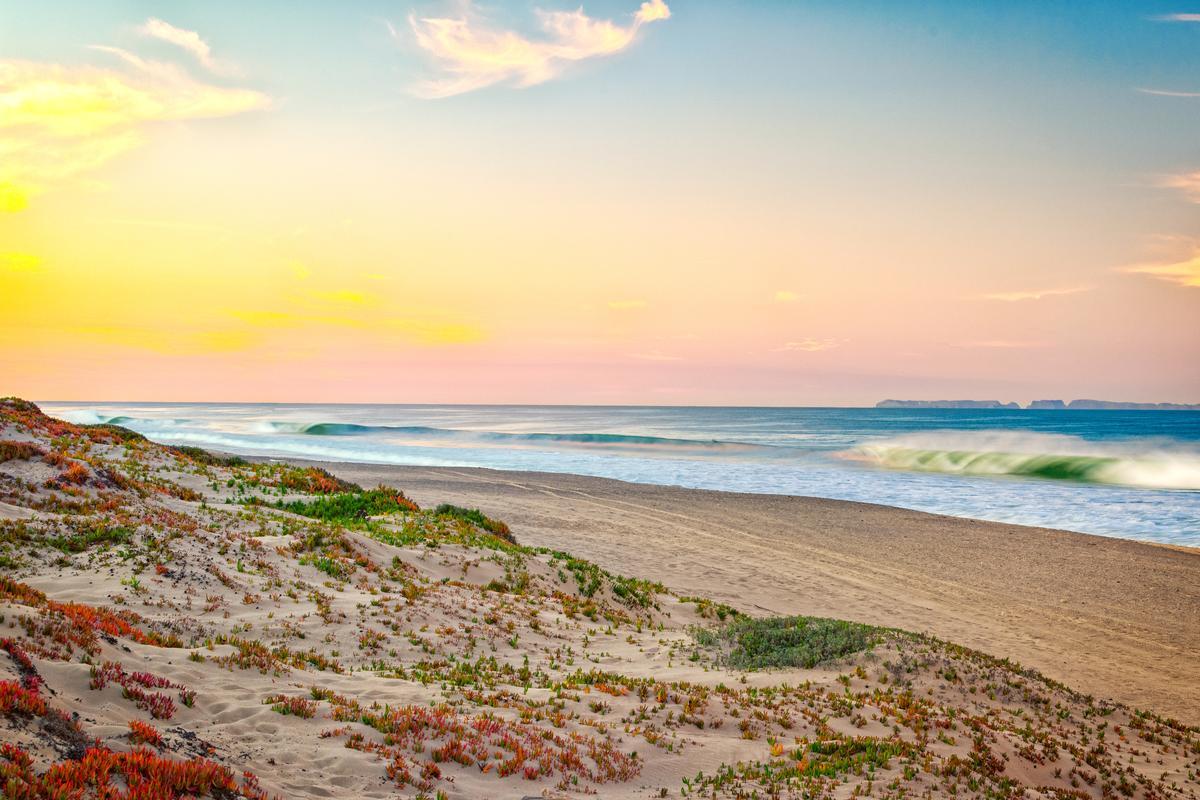
The connection between O'Keeffe's practice and fine art landscape photography is direct. She photographed the same American Southwest territory — New Mexico, Arizona, the desert corridor — that Eddie Jongas photographs. The abstract red rock formations, the sky, the land stripped to its essential forms. She approached them with paint. Contemporary fine art photographers approach them with cameras. The landscape answers both.
Frida Kahlo (1907–1954)
Frida Kahlo's life as a traditional artist was shaped by physical suffering to a degree that is almost incomprehensible. At six, she contracted polio. At eighteen, she was in a catastrophic bus accident that broke her spine in three places, shattered her collarbone, and destroyed her right leg. She had 35 surgical operations across her lifetime. She began painting seriously during her initial recovery, lying in bed, because her mother had a special easel constructed that could be used lying down.
"I paint myself because I am so often alone and I am the subject I know best," she said. Of her 143 paintings, the majority are self-portraits — not from vanity but from a kind of radical honesty about the subject material most immediately available to her. She painted what she knew. She painted what she felt. The technical restraint of her early work gave way to increasingly symbolic and surrealist imagery as her pain deepened — but the craftsmanship, the precision of her brushwork, remained constant.
Kahlo demonstrates something important about traditional artists: the tradition is not a constraint. It is a foundation from which to say whatever needs to be said, in whatever form the material demands.
David Hockney (born 1937)
David Hockney is the most commercially successful living traditional artist in the world — and one of the most surprising, because he has consistently refused to stop evolving. Born in Bradford, Yorkshire, he came to international attention with his California swimming pool paintings of the 1960s: clear, sunlit images of leisure and wealth that used the flat, graphic quality of California light as a formal element.
He has since worked in portraiture, collage, opera set design, and photography — producing multi-lens photographic works called "joiners" that present a scene from multiple simultaneous vantage points. In his late seventies, he moved back to Yorkshire and produced a series of enormous landscape paintings of the Wolds in every season. In 2020, during COVID lockdown at 83, he began producing daily digital paintings on an iPad — and the work was immediately recognized as extraordinary.
In 2018, his "Portrait of an Artist (Pool with Two Figures)" sold for $90 million — the highest price ever achieved at auction for a living artist at that time. He is still working at 86. Hockney proves that a traditional artist's practice does not require a fixed medium. What is fixed is the commitment to looking and to making — the instrument can change.
Ansel Adams (1902–1984) — The Bridge
Ansel Adams occupies a unique position in this list: he is simultaneously a traditional artist and a photographer — the figure who most clearly demonstrates that these categories are not opposites. He taught himself photography at 14 during his first trip to Yosemite with a Brownie camera. He spent the next seven decades returning to that valley and to the broader American West, developing a body of work that is technically and aesthetically as rigorous as anything produced in oil on canvas in the same period.
Adams developed the Zone System — a precise method for controlling exposure and darkroom development to achieve exactly the tonal range an image required — with the same systematic intent that Rembrandt applied to glazing technique or Bierstadt applied to his compositional preparation drawings. The craft was total. The Zone System is not a shortcut. It is a discipline.
What Adams shared with Bierstadt — beyond the subject matter of the American West — was the understanding that the purpose of the image was not to record a place but to make a viewer feel something true about it. His Yosemite photographs did for the conservation movement of the twentieth century what Bierstadt's paintings had done in the nineteenth. They made people care about places they had never been.
Adams is the figure who makes the argument for fine art landscape photography as a direct continuation of the traditional art lineage rather than a departure from it. He was, without qualification, a traditional artist who worked in a photographic medium. We will be exploring his life and legacy in a dedicated article — Ansel Adams: More Than a Famous Landscape Photographer — coming soon.
The American Landscape Tradition — From Canvas to Camera
The thread connecting Bierstadt, Homer, and Adams is not coincidental. They are three nodes in a specifically American artistic tradition — the tradition of going to the land itself as a subject worthy of the highest technical and artistic investment.
Thomas Cole founded the Hudson River School in the 1820s, establishing the American wilderness as a legitimate subject for serious painting at a time when European critics considered it provincial. Cole's students and successors — Bierstadt among them — took the tradition west, following the frontier as it moved. Winslow Homer took it to the coast. And when photography arrived as a mature medium in the twentieth century, Ansel Adams carried the same tradition forward without a gap.
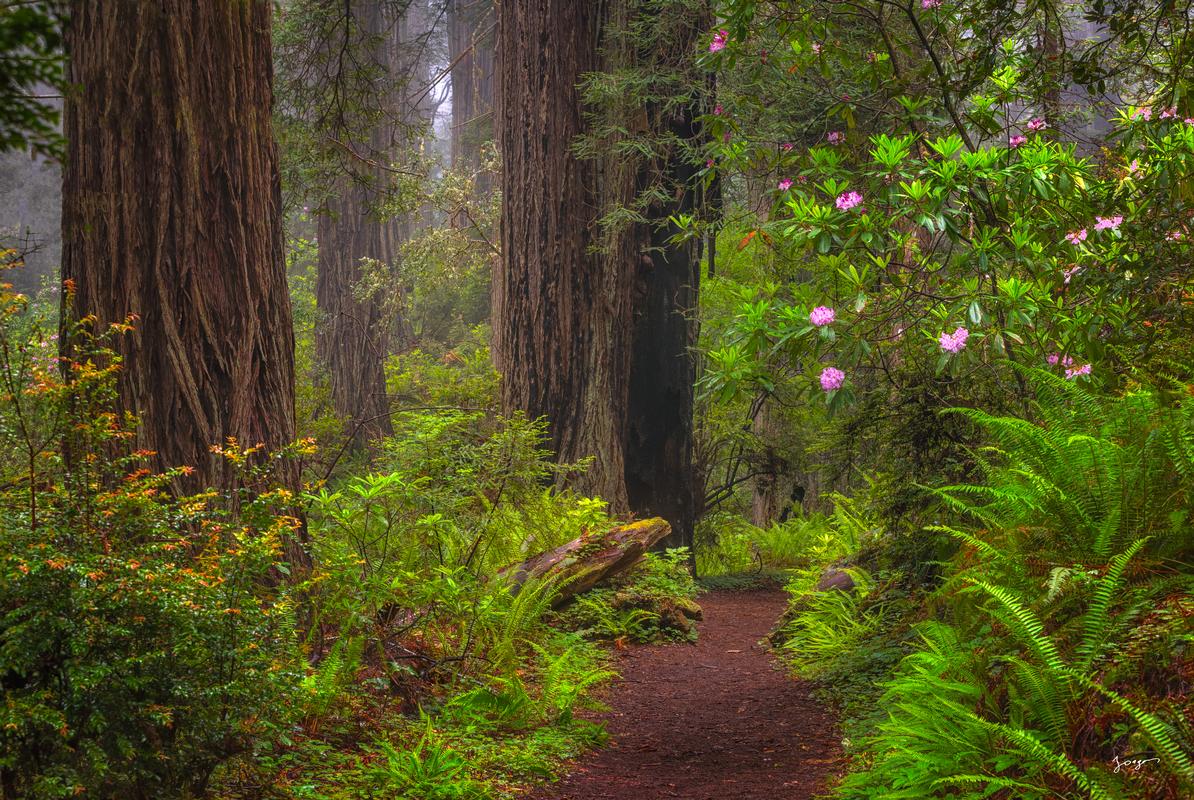
The subjects were the same: the unmediated American landscape as an object of sustained artistic attention. The technical standards were the same: the finest craft available, applied with total commitment. The purpose was the same: to make images of places that could make people understand why those places mattered.
This is the tradition that modern fine art landscape photographers work within — whether they know it explicitly or not. When I stand at the edge of the Palouse at harvest waiting for the light, I am doing exactly what Bierstadt did when he set up his easel below the granite walls of Yosemite. Different century. Different instrument. Same tradition. Same calling.
What a Modern Fine Art Photographer Shares with Traditional Artists
The question I started with — what makes someone a traditional artist — turns out to have an answer that extends further than the traditional materials. The defining characteristics are:
Mastery of craft as inseparable from vision. For a traditional artist, how something is made is part of what it means. For a fine art photographer, the same applies: the choice of lens, exposure, light condition, print surface, and the hours spent in post-processing are not neutral technical operations. They are artistic decisions that shape the meaning of the final image.
Sustained attention to specific subjects. O'Keeffe returned to the New Mexico desert for decades. Homer painted the Maine coast for thirty years. Rembrandt painted himself across an entire lifetime. Serious landscape photographers — Adams and his Yosemite, and any photographer who returns to the same locations across seasons and years — follow the same discipline. The depth of the work comes from the sustained return, not the single visit.
The unrepeatable moment as the subject. The Impressionists understood that light was not a stable backdrop but the actual subject of painting — changing minute by minute, never exactly repeatable. Landscape photography operates on the same understanding. The fine art photography print on a wall represents a moment that has already closed — a quality of light, a configuration of weather and subject, that will not recur in exactly that form. That singularity is what the image preserves.
The commitment to a quality of output that matches the quality of the vision. Traditional artists do not stop at "good enough." The standards are set by the craft itself — by what is possible at the highest level of execution. For fine art photographers who produce TruLife acrylic-mounted prints on museum-grade surfaces, the same standard applies: the physical object that is the artwork must be worthy of the image it contains.
The Tradition Continues
A traditional artist is not defined by the century they worked in, or the medium they used, or whether their work hangs in a museum. They are defined by their relationship to a craft — by the willingness to pursue mastery as an end in itself, to take a subject seriously enough to return to it across years, and to produce work that stands as an object of genuine quality rather than a gesture toward one.
The artists on this list — Rembrandt through Hockney, Bierstadt through Adams — all share that relationship. And so does any serious fine art photographer who goes to a location before dawn, waits for hours, and produces a single image worthy of the place and the light. The tradition is not behind us. It is still being made.
Browse Eddie Jongas's modern fine art photography collections — landscape, cities, Pacific Northwest, California, seascape, and the American Southwest. Work made in the tradition of Bierstadt, Homer, and Adams, produced for the walls of today.
Explore Landscape Photography Prints →
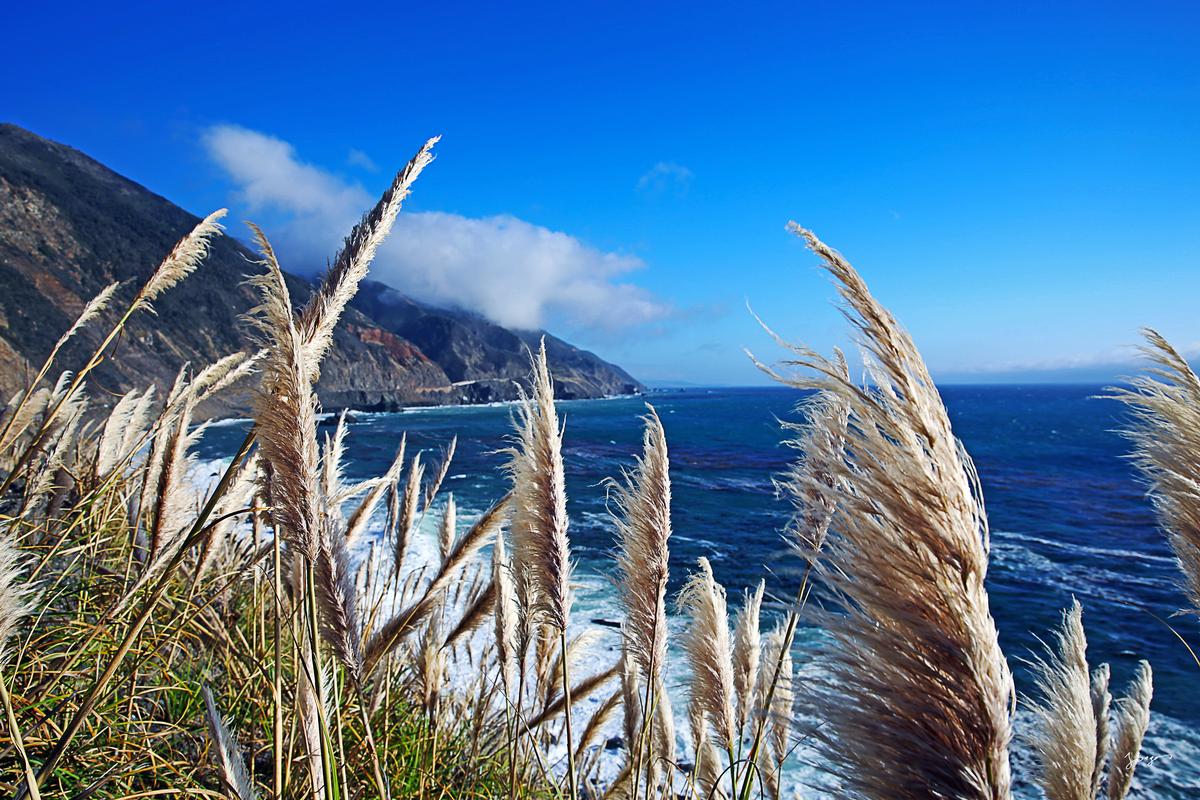
Eddie Jongas is a modern fine art photographer based in Las Vegas, Nevada. His TruLife acrylic-mounted limited edition prints are available exclusively through jongasfineartphotography.com. Free shipping to all 50 states.
