I spend a lot of time thinking about where fine art photography sits in the broader history of art. People often ask me whether photography counts as “real” art — meaning traditional art — or whether it’s something separate. It’s a question worth answering properly, because the answer says something important about what fine art photography actually is and why it deserves to hang on the same wall as a painting.
But to get there, we have to start at the beginning. What is traditional art, exactly? Who made it? And what does the long tradition of human mark-making have to do with a photographer standing on a hillside at 4am waiting for the light?
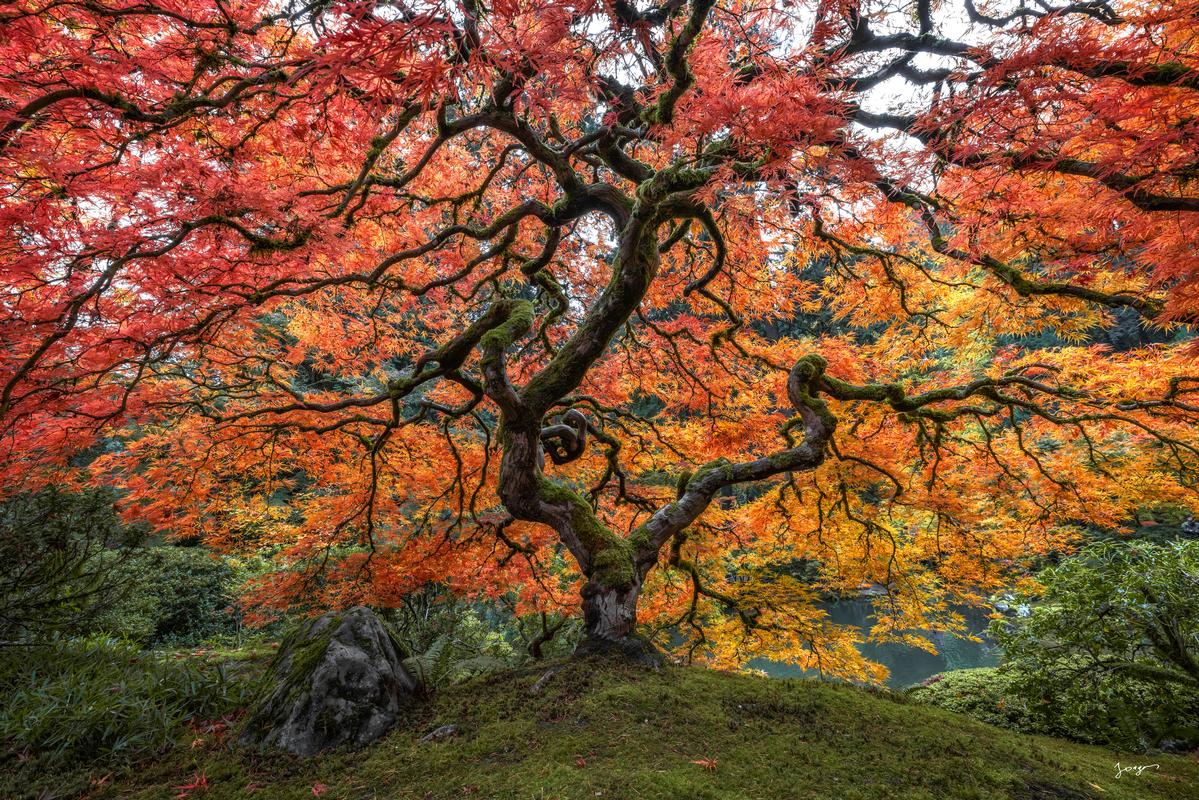
More than most people think.
What Is Traditional Art — The Definition
Traditional art refers to artistic creations that are rooted in long-established techniques, styles, and materials. It encompasses a wide range of disciplines — painting, drawing, sculpture, printmaking, ceramics, textiles, and more — united by a common thread: they depend on the physical skill of a human hand, the mastery of materials that have existed for centuries, and a lineage of craft passed from artist to artist across generations.
The word “traditional” here doesn’t mean old-fashioned or static. Traditional art forms are living practices, continuously evolving while remaining grounded in principles refined over centuries. A painter working in oils today is using a medium perfected during the Renaissance, applying it through techniques developed over five hundred years of collective practice. That continuity is what “traditional” describes — not the subject matter, but the relationship between the artist and a craft with deep roots.
Key Characteristics of Traditional Art
Whatever the medium or subject, traditional art tends to share a set of defining characteristics. Understanding these helps clarify both what traditional art is and — as we’ll discuss later — what it shares with fine art photography at its highest level.
Defining Characteristics
- Techniques and Materials: Traditional artists use methods and materials that have been developed, tested, and passed down across generations. Oil painters work with the same fundamental medium that Rembrandt used. Sculptors still use stone, clay, bronze, and wood. The materials aren’t incidental — they carry history, limitation, and possibility simultaneously. The constraint of the material is part of what shapes the work.
- Representational or Realistic Depiction: Traditional art has historically aimed at capturing recognizable subjects — landscapes, figures, objects, events — with accuracy and attention to observed reality. This doesn’t mean photographic literalism, but it does mean the artwork is anchored in the visible world. The Impressionists blurred edges and broke color into fragments of light — but they were still painting what they saw in front of them.
- Emphasis on Skill and Technique: Traditional art demands years of dedicated practice. The mastery of proportion, perspective, tonal gradation, color mixing, compositional balance — none of these come quickly. A traditional artist’s body of work is inseparable from their accumulated technical knowledge. The skill is visible in the work in a way that cannot be faked.
- Historical and Cultural Context: Every work of traditional art exists within a conversation — with the art that came before it, with the cultural moment it was created in, with the traditions and movements it draws from or pushes against. Traditional art is never made in a vacuum. It always knows where it came from.
- Long-Standing Artistic Conventions: Perspective, proportion, balance, harmony, color theory — these are not arbitrary rules but accumulated wisdom about how visual experience works. Traditional art takes these conventions seriously, whether following them faithfully or departing from them deliberately.
The Painters — Traditional Art’s Most Visible Legacy
Painting is the medium most people think of first when they hear the words “traditional art.” The history of painting is the history of looking at the world and trying to capture what looking feels like.
Vincent van Gogh (1853–1890). Van Gogh is one of the most recognized names in the history of art — and one of the most misunderstood. He is remembered for his swirling brushwork, his explosive color, and the mythology of the tortured genius. What gets lost is how seriously he worked.
In the ten years he was active as an artist — only ten years — Van Gogh produced more than 900 paintings. He worked with extraordinary intensity and discipline, studying anatomy, perspective, and color theory through relentless practice. He corresponded constantly with his brother Theo in letters that are now considered works of literature in their own right — hundreds of pages of careful thinking about light, color, technique, and the purpose of art.
The detail most people don’t know: Van Gogh sold exactly one painting in his lifetime. The Red Vineyard, sold for 400 francs in 1890 — a few months before his death. Everything else was made without a market, without validation, in pursuit of something he believed in completely. Today his paintings sell for hundreds of millions of dollars. He died believing he had failed.
Edward Hopper (1882–1967). Edward Hopper painted American loneliness the way no one else has. His images of diners, motel rooms, offices, and streets communicate isolation even when the figures in them are together. Nighthawks — his most famous work — shows four people in a late-night diner, painted in six weeks in 1942. The diner it depicts no longer exists. The specific light of that specific night is preserved only in the painting.
What few people know: Hopper’s wife Jo was the model for every female figure he ever painted. She also negotiated all his business arrangements and kept meticulous records of every painting he produced, documenting them in journals that have since become invaluable to art historians. The work was a collaboration more than it appeared.
Andrew Wyeth (1917–2009). Wyeth worked primarily in tempera and watercolor, painting the landscapes and people of rural Pennsylvania and Maine with a quiet, austere precision that places him apart from most of his contemporaries. His most famous work, Christina’s World, depicts his neighbor Anna Christina Olson crawling across a field toward a farmhouse — a scene of ordinary life made strange and haunting by the vast empty field between the figure and the building.
The lesser-known fact about Wyeth is the Helga Pictures — a series of 247 drawings and paintings of his neighbor Helga Testa, produced secretly over fifteen years without his wife’s knowledge. When the series was sold and exhibited in 1986, it became one of the most discussed artistic revelations of the decade. Nobody knew they existed.
The Impressionists — Monet, Cassatt, Renoir. Claude Monet (1840–1926) built his most famous body of work — the Water Lilies series — while nearly blind. Cataracts had so distorted his color perception by his 70s that he was painting what he remembered and felt rather than what he could clearly see. He had a special Japanese garden constructed at his home in Giverny specifically for the purpose of painting it. He then painted it hundreds of times, in every season and light condition, for the last two decades of his life. The garden was the subject. The light was the real subject.
Mary Cassatt (1844–1926) was the only American to exhibit with the French Impressionists — invited by Edgar Degas, who recognized her talent immediately. She never married, devoted her life entirely to her work, and went blind in her early 70s. She continued to advocate fiercely for Impressionism and for the acceptance of women in art long after she could no longer paint.
Pierre-Auguste Renoir (1841–1919) painted scenes of leisure, warmth, and human connection throughout his career. In his final years, severe rheumatoid arthritis had deformed his hands so badly that he could no longer grip a brush. His solution was to have the brush strapped to his wrist. He painted until days before his death. His son Jean became one of the greatest film directors in history — carrying the visual sensibility forward into a new medium.
“The deliberate pursuit of a specific visual moment, the willingness to return again and again until the light is right — this is what serious painters and serious photographers share above all else.”
The Abstract Expressionists — Pollock, Rothko, de Kooning. Jackson Pollock (1912–1956) developed his drip-painting technique after encountering Native American sand painters at work — artists who moved around their canvases rather than standing at an easel. He placed his canvases on the floor and moved around and through them, dripping and flinging paint. The paintings are records of movement as much as marks. He was discovered by art dealer Peggy Guggenheim, who gave him his first solo show. He died at 44 in a drunk driving accident, with most of his most significant work already behind him.
Mark Rothko (1903–1970) was born in Latvia and immigrated to the United States as a child. His large color field paintings are designed to produce specific emotional states in the viewer — he famously said he wanted people to weep in front of them. He was deeply disturbed when the Seagram Murals he had been commissioned to paint for the Four Seasons Restaurant in New York were installed in a dining room context. He eventually returned the commission. He wanted his paintings seen in silence and contemplation, not over lunch.
Where Traditional Art Ends and Abstract Art Begins
Pollock and Rothko sit at a fascinating and uncomfortable crossroads in art history. They are included here because their roots are firmly in the traditional art lineage — trained in classical techniques, working in paint on canvas, operating within the gallery and museum system that descends directly from the European academic tradition. But the work they made pushes past what most people recognize as traditional art and into something else entirely: abstract art.
Abstract art — art that abandons recognizable subjects in favor of pure form, color, line, and composition — emerged from the traditional art tradition as a deliberate departure from it. The Impressionists loosened the relationship between paint and observed reality. The Expressionists prioritized emotional truth over visual accuracy. The Cubists fractured perspective. And the Abstract Expressionists, Pollock and Rothko among them, made the final break: no subject at all. The painting became the subject. The color field, the drip, the gesture — these were not representations of things in the world. They were things in themselves.
Pollock’s Number 31 doesn’t show you anything. It is an experience — of energy, of scale, of the physical act of making. Rothko’s color rectangles don’t depict anything. They generate an atmosphere. Both artists believed that pure visual experience — color and form without the mediation of subject matter — could produce a more direct emotional response than any representational painting could.
This is the question that abstract art raises and that traditional art had been quietly building toward for centuries: does a work of art need to be about something external, or can the visual experience itself be the content? Abstract art answers that question with a definitive no — and in doing so, opened up the entire territory of non-representational visual experience that contemporary artists, including photographers, continue to explore.
The connection between abstract art and abstract fine art photography is direct and significant. When Eddie Jongas photographs a slot canyon wall at the angle where the geology becomes pure color and form, or captures a section of desert salt flat from above where the surface reads as a minimalist painting, he is working in the same visual territory that Pollock and Rothko defined. The instrument is different. The intention — to produce a purely visual experience that bypasses literal subject matter and operates directly on the viewer’s emotional response — is the same.
Abstract art — its definition, its history, its most famous examples, and its relationship to abstract photography — is a subject large enough to deserve its own article. We’ll be publishing a dedicated deep-dive on abstract art shortly. It begins where Pollock and Rothko leave off.
The Pop Artists — Warhol, Lichtenstein, Johns. Andy Warhol (1928–1987) was a highly successful commercial illustrator before he became a fine artist — a detail his mythology tends to obscure. His early career drawing shoe advertisements for Vogue and Harper’s Bazaar taught him everything he later applied to silk-screening celebrity portraits. In 1968, he was shot by Valerie Solanas in his Factory studio and survived. He later said the experience changed his relationship to his own body and to mortality permanently. His final work — painted the day before he died — was a series on Leonardo da Vinci’s Last Supper.
The Sculptors
Michelangelo (1475–1564). Michelangelo is often reduced to the Sistine Chapel and the David, which is like reducing Van Gogh to the sunflowers. He was simultaneously a sculptor, painter, architect, and poet — arguably the most technically accomplished artist in Western history across multiple disciplines.
The most persistent myth about Michelangelo is that he painted the Sistine Chapel lying on his back. He did not. He designed and built a custom curved scaffolding system and stood upright throughout, working with his arms raised for four years. The Pietà — the marble sculpture of the Virgin holding Christ’s body after the crucifixion — was completed when he was 24 years old. Many art historians consider it the most technically perfect marble carving ever produced.
Louise Bourgeois (1911–2010). Bourgeois made some of her most significant work after the age of 70 — a reminder that the timeline of artistic development doesn’t follow conventional career logic. Her giant spider sculptures — called Maman — appear outside museums and galleries worldwide. She described them as tributes to her mother: strong, patient, and capable of building something from nothing. She produced work until her death at 98.
Anish Kapoor (born 1954). Kapoor’s large-scale public sculptures use reflective surfaces, voids, and pigments to create experiences that are as much about the viewer as the object. Cloud Gate in Chicago — nicknamed “The Bean” — reflects the city skyline around every person who approaches it, making the viewer both audience and subject simultaneously. He holds the exclusive rights to use Vantablack, the darkest black substance known to science, in art.
The Draftsmen — Drawing as Traditional Art
Leonardo da Vinci (1452–1519). Leonardo was left-handed and wrote in mirror script — right to left, readable only in a mirror — a habit that may have developed from his left-handedness or from a desire for a degree of privacy. His notebooks contain detailed drawings of flying machines, anatomical studies, hydraulic systems, and architectural designs that would not be realized for hundreds of years after his death.
The Mona Lisa was never delivered to the client who commissioned it. Leonardo kept it with him for the last years of his life, continuing to work on it. He was also a committed vegetarian who purchased caged birds at market for the sole purpose of releasing them.
M.C. Escher (1898–1972). Escher’s work is among the most reproduced art of the twentieth century — yet he had no formal training in mathematics, the discipline that most clearly underpins his work. He studied decorative arts. His fame came late: most of his most celebrated pieces were made after he turned 40. Mathematicians and scientists recognized the geometric and topological principles embedded in his impossible staircases and tessellations before the art world did. He became famous largely through scientists sharing his prints at conferences.
Käthe Kollwitz (1867–1945). Kollwitz made drawings and prints of working-class poverty, war, grief, and maternal loss with a directness that remains almost unbearable to look at. She lost her son in World War One and her grandson in World War Two. The work that came from that grief — particularly her series War and the sculpture Grieving Parents — is among the most emotionally direct art ever made. She was the first woman elected to the Prussian Academy of Arts, and was later expelled by the Nazis.
The Printmakers
Albrecht Dürer (1471–1528). Dürer brought the sophistication of Italian Renaissance painting to Northern European printmaking — achieving in woodcuts and engravings a tonal range and detail that had previously been considered impossible in the medium. He was also one of the first artists to use self-portraiture as a serious artistic statement rather than simply as a study. His 1500 self-portrait, in which he depicts himself frontally in the pose traditionally reserved for images of Christ, is one of the most discussed works of the entire Renaissance period.
Francisco Goya (1746–1828). Goya was the official court painter to the Spanish royal family — and simultaneously one of the most subversive artists of his era. His satirical series Los Caprichos mocked the aristocracy and the clergy with a savageness that is still startling today. At 46, a mysterious illness left him completely and permanently deaf. His Black Paintings — dark, haunted works covering the walls of his own house — were made entirely for himself, never intended for exhibition. They were discovered only after his death.
Yayoi Kusama (born 1929). Kusama has experienced visual hallucinations since childhood — fields of dots, nets, and patterns that cover everything she sees. Her art is a form of self-therapy: by putting the hallucinations on canvas, she externalizes them and gains a degree of control over them. Since 1977, she has lived voluntarily in a psychiatric facility in Tokyo — by her own choice, not involuntary commitment. She walks to her studio next door every day and continues working. At 95, she is one of the most commercially successful living artists in the world.
Other Traditional Art Forms
Traditional art extends well beyond what hangs in galleries. Ceramics carry the record of human civilization more completely than almost any other medium — pottery sherds are among the most durable physical artifacts archaeology recovers. Native American pottery traditions encode cosmological beliefs, seasonal cycles, and tribal identity in functional objects. Chinese porcelain represents one of the longest continuous artistic traditions in human history — produced to technical standards that European potters spent centuries trying to replicate.
Textiles — tapestries, quilts, embroidery — were historically among the most time-consuming and expensive art forms to produce. The Bayeux Tapestry, a 70-metre embroidered cloth depicting the Norman conquest of England, was made in the 1070s and survives intact today. Japanese embroidery techniques require decades of training to master. Quilting traditions in the American South developed into a sophisticated visual language that encoded information as well as aesthetic intention.
Calligraphy in Islamic and East Asian traditions was considered the highest visual art form — the primary medium through which educated people expressed aesthetic sensibility. The discipline required to produce a single perfect character in Chinese brush painting or Arabic script represents the same commitment to mastery that defines traditional art across every medium.
Where Does Fine Art Photography Fit in the Traditional Art Tradition?
This is the question I think about most often as a photographer.
Fine art photography is frequently categorized separately from traditional art — and in a technical sense, the distinction is understandable. Traditional art, in the classical definition, uses materials that have been refined over centuries. A camera is a relatively recent invention. The photographic image is a product of chemistry and physics rather than a hand forming clay or applying pigment.
But look more closely at what the greatest traditional painters were actually doing, and the gap between painting and fine art photography becomes less significant than it first appears.
Monet building his Japanese garden specifically to paint it. Hopper waiting for the specific quality of light in a specific diner at a specific hour. Wyeth returning to the same landscape across all four seasons for decades. These are the same fundamental acts that define serious landscape photography — the deliberate pursuit of a specific visual moment, the willingness to return again and again until the light is right, the discipline of composing within a frame to produce an image that conveys more than what the eye literally sees.
The core principles that define traditional art — compositional intention, tonal mastery, the relationship between light and subject, the artist’s individual vision applied to observed reality — are precisely the principles that define fine art photography at its best. A landscape photography print produced on TruLife acrylic-mounted surfaces and authenticated as a signed limited edition has more in common with a Constable oil than it does with a phone snapshot, regardless of what instrument was used to make it.
This is why serious collectors place fine art photography alongside painting and sculpture in their collections — not as a lesser category, but as the contemporary continuation of the same visual tradition. The medium changes. The practice — the deliberate, skilled, intentional act of looking at the world and rendering what that looking feels like — does not.
The One Thing Traditional Art and the Tru Masterpiece™ Collection Share
There is one quality that the greatest works of traditional art all share — a quality that has nothing to do with medium or technique and everything to do with existence itself: there is only one of them. There is only one original Mona Lisa. There is only one original Starry Night. There is only one original Pietà. The entire foundation of their cultural and financial value rests on that singularity. Every reproduction, every print, every poster made from those works exists in a different category entirely — because it is a copy, however faithful, of the one thing that cannot be copied.
This is the principle behind the Jongas Tru Masterpiece™ collection — and it is the reason the Tru Masterpiece™ designation means something that no standard limited edition photography print can claim.
Every print carrying the Tru Masterpiece™ trademark is a single edition — one print, produced once, in any size and on any surface, ever. Not edition number one of fifty. Not one of a hundred. One. The only copy in existence. When it is acquired, the image is permanently retired from production in every form. No future collector will ever own one. The person who acquires a Tru Masterpiece™ print owns what traditional art collectors have always pursued: the original. Not a reference to the original. Not a reproduction of the original. The original — the singular physical object that is the work itself.
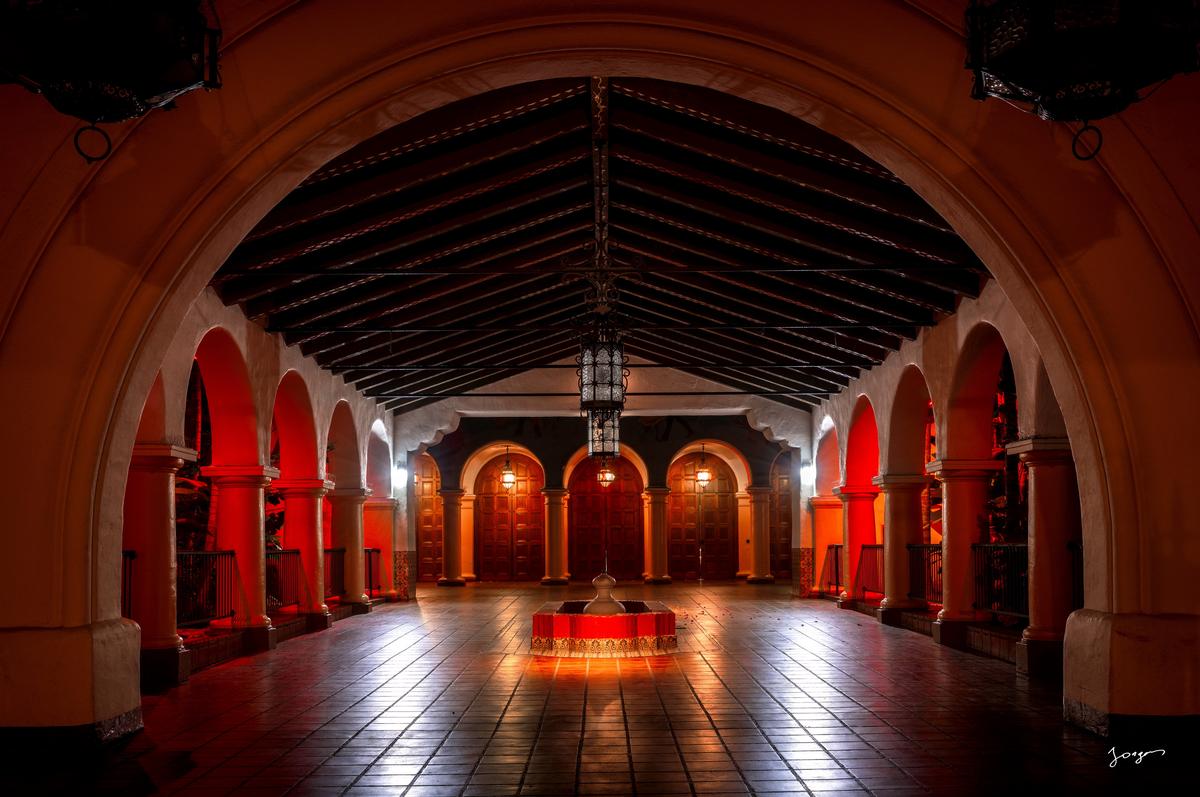
The parallel to traditional art is exact. A Van Gogh painting is valuable because Van Gogh made one of it and it cannot be remade. A Tru Masterpiece™ print is structured on the same logic: Eddie Jongas made one of it, and his commitment is that only one will ever exist. The TruLife acrylic-mounted surface — museum-grade optical acrylic that renders color at the highest level available to any photographic printing process — ensures the object itself is worthy of that designation. Museum-quality production. Single edition. Permanent retirement upon acquisition.
This is what “masterpiece” has always meant in the traditional art world: a singular work of the highest craft, existing once, belonging to one person at a time. The Tru Masterpiece™ collection brings that standard into fine art photography for the first time — not as a marketing claim, but as a legally binding commitment enforced by trademark and documented by Certificate of Authenticity on every piece.
Explore the Tru Masterpiece™ Collection →
Explore Eddie Jongas’s modern fine art photography collections — the contemporary expression of the same tradition that runs from the cave painters of Lascaux through the Impressionists to the present day.
What Makes Someone a Traditional Artist?
We’ve covered what traditional art is and who made it. But defining the art form is only half the conversation. The other half is understanding the person behind it — the particular combination of disposition, discipline, and commitment that produces a traditional artist as distinct from someone who merely makes art occasionally.
That question — what actually makes someone a traditional artist, as opposed to someone who simply uses traditional materials — is one worth exploring in its own right. We’ll be publishing a full companion piece on exactly that shortly. In the meantime, the artists on this page offer as good a working answer as any: a traditional artist is someone for whom the mastery of a craft is inseparable from the act of making art. The skill and the vision are one thing, not two.
From the Walls of History to Your Wall
The tradition we’ve traced in this article — from Leonardo’s mirror-script notebooks to Kusama’s dot-covered canvases to Pollock’s paint-splattered studio floor — is a continuous story about what happens when a human being looks at the world with genuine attention and tries to capture what that attention reveals.
That story didn’t end with painting. It expanded into photography. And within fine art photography, the same standards apply: compositional deliberateness, technical mastery, the pursuit of the unrepeatable moment, the commitment to a quality of output that reflects the seriousness of the practice.
Landscape photography prints, city photography, abstract fine art photography, black and white photography — these are the contemporary forms of the same practice that produced the works on the walls of the world’s greatest museums. They belong on walls, too. Yours, specifically.
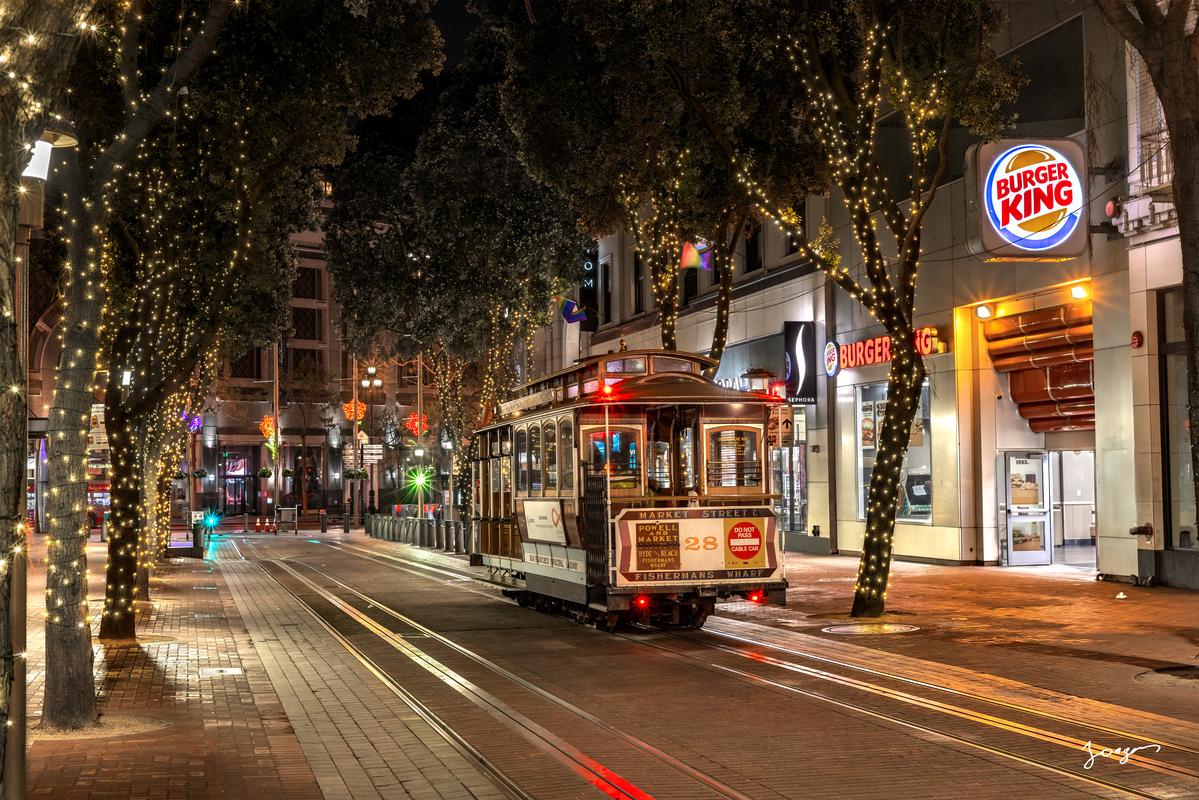
Browse Eddie Jongas’s fine art photography collections →
Eddie Jongas is a modern fine art photographer based in Las Vegas, Nevada. His TruLife acrylic-mounted limited edition prints are available exclusively through jongasfineartphotography.com. Free shipping to all 50 states.
